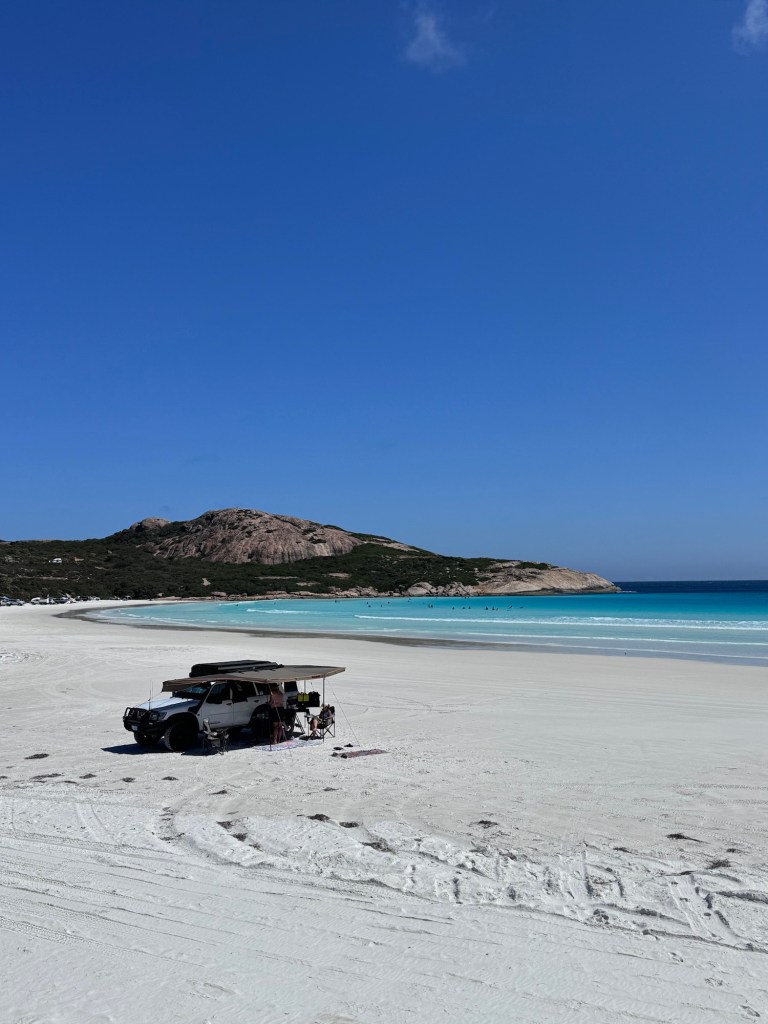
Equipped with its own high and lows, rural and remote nursing deserves its own piece. Do you have a sense of adventure, a sprinkle of spontaneity and are you rather mad? Well rural and remote nursing is for you!
Just joking you only need to be slightly mad to want to do it…
I love rural nursing, having done it for the majority of my stint in Australia, I wanted to digress my experiences and let you into this new world of nursing. (Purely based on us international nurses who have not had the opportunity to travel with our jobs!)
Rural and Remote Nursing Jobs in Australia
👩⚕️ Agency Work – Usually short contracts: upwards of 4 weeks to a maximum of 12 weeks. Although, if you like your placement, you can usually extend! My first contract went from 12 weeks to 7 months! Agencies can also sub-contract you for longer periods of time! (If you are looking for a Nursing Agency, contact me and I can refer you over!)
💼 Government Agencies – Very similar to an ordinary nurse agency, just run by the Government. Usually slightly reduced rates, but sometimes prioritised over normal agency work.
🏥 Hospital Contracts – The same lay out as home. Contracts through the health board/ hospital/ health-care setting. You can sign up for fixed term e.g. 6-12 months, part-time, full-time. Less hourly pay, but reliable work.
What is Rural and Remote Nursing?
Rural nursing – nursing in locations outside of regional areas, where nurses are in high demand and staffing is sparse. A pretty good one liner…if you ask me.
Remote nursing – nursing in locations that have populations less than 5,000 people!
They both are very similar, but remote nursing is categorised by being more isolated and having less access to resources than rural nursing. You have to have specialist skills and training to work here, as you can essentially be the only nurse in the area!
Australia is a huge country – I mean massive. There is a third of the UK population, with 32 times the land mass (my favourite fact, I have been waiting to use it!) The population is spread across the land, and as are the resources. Smaller hospitals, nurse-led clinics, outreach community teams, RFDS (Royal Flying Doctors) – a whole other network created to support those, outside of the busy areas.
With some locations being only accessible by plane there is FIFO (Fly-in-Fly-Out), and for those accessible by car (and with nurses willing to use their own vehicle) there is DIDO (Drive-in-Drive- Out) contracts.
There are aged-care settings, maternal health units, child and family health centres (to name a few!), just so many options it is hard to comprehend.
While there are similarities to the UK- e.g. healthcare setting, there are a lot of of differences.
Aside from:
💵 Supported Travel
🏡 Free Accommodation
🤑 Financial Bonuses
🍟 Potential Food Purchasing Support
There is a lot to consider. Location for one!
I will cover all aspects of rural and remote nursing and give my own experiences, with the aim of helping you decide whether this is for you!
Places for Rural and Remote Nursing Contracts in Australia:
This is not to say you will be sent to these locations, they are just popular sites for rural and remote contracts. However, I thought it would be good to have a location to research the areas, to see what the landscape or towns can look like.
WA, NT, QLD, SA, NT, VIC (ACT not included – Canberra, capital of Australia, mostly city nursing).
🏖️ Western Australia:
- Broome, Port Headland, Geraldton.
✅ Best for: Aboriginal health, FIFO nursing, emergency and acute care.
🏝️ Queensland:
- Rockhampton, Townsville, Cairns.
✅ Best for: Indigenous health, remote clinics, aged care.
🌊 South Australia:
- Port Lincoln, Ceduna, Murray Bridge.
✅ Best for: Outback nursing, emergency care, hospital-based contracts.
🗻 New South Wales:
- Broken Hill, Tamworth, Lismore.
✅ Best for: Rural hospitals, mental health nursing and emergency.
🌦️ Victoria:
- Bairnsdale, Horsham, Mildura.
✅ Best for: Aged care, multi-purpose rural health services.
🏜️ Northern Territory:
- Alice Springs and Tennant Creek, Katherine.
✅ Best for: High-paying contracts, primary healthcare, emergency and remote nursing.
There are a lot of other locations and a lot of fields to work in! I am specifically a RCN (Registered Children’s Nurse) so I can only work in paediatrics. I wanted to work rurally and personally have been offered the majority of my work in WA or NSW.
How Much do Rural and Remote Nurses Earn?
- As an agency nurse you will most likely earn more per hour than permanent – however, you don’t get sick pay, maternity leave, annual leave (to name a few!)
- As a 1.3 RN permanent you roughly earn $40p/h, but agency this can range from $50-$70p/h
- You can negotiate pay! This was something I did not know about! If you want to work with a specific agency and have been quoted different hourly wages with an agency, pitch it – you have nothing to lose, and potentially more dollars to gain 🤯
- Comparatively to the cities, you have free / subsidised rent!
Let’s say you’re being paid $50 base pay, every hour you’re $10 an hour better off. You’re saving on your rent – (estimating $400 for a room in a shared house).
For a 12 week contract you have earned an extra $4,800 (calculated on a base pay, of $10 extra an hour for 40 hours work). And saved $4,800 on rent!!!
Obviously this is calculated on a base pay $10 an hour increase – a lot of the time it will be more !!
I love rural nursing and I will admit I am biased towards it. I love the fact you can explore new places and get paid to do it, you can see new parts of Australia you haven’t even heard of, but it would not be fair for me to advertise all the good and not highlight the bad!
Rural nursing is not everyone’s cup of tea ☕️ a major reason for that is the lifestyle…. (How about that for a cliffhanger).
Lifestyle
Left you hanging for a whole sentence didn’t I – a good cliffhanger indeed.
The lifestyle in the outback can be adventurous, exciting, unique, but that does not mean it is not without it’s challenges!
- It’s Remote: Clues in the name – I don’t think much more needs saying does it?
- It Can Be Isolating: This isn’t to say it always is – personally, I found it more friendly than the cities (but I recognise that is my own experience!) Being in low population dense areas, can make it harder to meet people.
- Less Facilities: This is a given. There isn’t your favourite Frappuccino franchise (credit to my English teacher for teaching me about alliterating) on every corner. There might be no clothes shops, or a beach for hours! If these things are important to you, rural nursing might not be the career for you!
- You’re the Newbie: Like with any agency role, you are always the new person (unless like me you keep returning to the same hospital). Depending on your personality, this can be a good thing or bad thing.
- You Can be on Your Own: This is interchangeable between places – and entirely dependent on your skills and capabilities. There are rural nursing contracts which have single nurses on shifts, when there are limited patients. (Drug checking on different wards for single checkers – yes it does happen in paediatrics too.) Especially in remote contracts, you could be working at a nurse only clinic – being the only nurse in the district, covering patients in a vast area.
- You Have to Fulfil Your Contract: Again, this can be something that is difficult to anticipate. A lot of the time agencies will state that if you don’t fulfil your contract conditions you may have to pay for / contribute to your original travel or housing. An agency pays for you to go to these locations, they’re investing in you- of course they want their return.
Why is There Travel Nursing?
There are many reasons rural nurses are required in certain areas:
- Small Population – In some areas the population could be as low as a few hundred people! Of course having the right amount of nurses for this area is rare, so employing from outside the land is the most feasible option.
- Low Staffing – Arguably related to the point above. Small populations- less nurses – more reason to employ from elsewhere.
- Natural Disasters – Australia unfortunately suffers cyclones, fires, mass flooding. For these events they need support and workers to help out in the hospitals.
- Limited Resources – Having not grown up in rural towns, it is hard to hire people into this way of life. It is a change and it takes some adaptation. You may be only able to adjust to this for short period of time, and that is fine! We are all different, but this too, is cause for a rotation of rural staff.
💡 Tips:
- Sign up for a short contract initially- then you can suss out whether it’s for you without committing to 12 weeks away.
- Check the area before you accept – can you see yourself staying there?
- Make sure you feel competent to be working, check that it suits your scope.
- If it does not feel right, do not go ahead! This is your life, and it is not for everybody.
- Don’t just do it for money! Yes you earn well, but it is an excuse to travel, see new locations and learn new skills.
Have you worked as an agency rural nurse? Or would you? Let me know in the comments below! If this sounds like something you would be interested in, contact me for help!
My socials:
@emilytheuknursedownunder – TikTok 🎥
@emilytheuknursedownunder – Instagram 📸
emilytheuknursedownunder@gmail.com ✉️
As always,
Thank you so much for reading!
All the best,
Emily the UK Nurse Down Under
Xxx

 UK Nurse in Aus